SpotShark Video Analytics

The AI engine
that runs everything.

SVA is Shark Byte's proprietary computer-vision core. It reads plates, make, color, class, dimensions and EV status in under 2 milliseconds. It powers gated lanes, frictionless lots, and valet operations. It integrates into Garagenet and partner PARCS. It is 100% in-house.

99.9%
LPR F1 accuracy
across conditions
99.7%
ReID match accuracy
without a plate
<1.8ms
Full pipeline
end-to-end latency
900fps
Per-server throughput
500fps on consumer GPU

From pixel to decision in under 2 ms.

SVA processes camera frames through a multi-stage neural pipeline. Each stage is an independent in-house model. Redundancy at every step means a single model's uncertainty gets cross-checked before any output is committed.

Stage 01
Frame Ingestion
Raw feed from any RTSP/USB camera. No proprietary hardware required. Jetson edge or on-site GPU.
Any camera → SVA
Stage 02
Vehicle Detection
Primary detection net locates and bounds every vehicle in frame. Multi-class: car, truck, SUV, motorcycle, EV.
Body + class typed
Stage 03
LPR+
Plate localizer → character recognition → state resolver → specialized plate flags (Handicapped, Veteran, DV).
99.1–99.9% F1
Stage 04
ReID Tracking
If plate is absent or unreadable, visual fingerprint matches vehicle across cameras at 99.7% accuracy.
99.7% match rate
Stage 05
Metadata + Dimension
Make, color, body type, EV/PHEV/BEV flag. 3D dimension estimation (height + length) from standard 2D feed.
6+ attributes per pass
Stage 06
Action + Output
Gate command, ticket print, alert or billing event, delivered via API, direct PARCS integration or Garagenet.
<1.8ms total
Design principle

Redundant by design

Every critical decision is cross-validated by multiple independent neural networks running in parallel. Is this a plate? Is this the same vehicle? The same redundancy pattern used in autopilot and avionics: if one model errs, the others catch it.

Multi-model voting Uncertainty thresholding Graceful degradation
Learning

Self-learning site maps

SVA observes a new site for 1–3 days and autonomously builds a 3D spatial map. No manual camera calibration, no per-lane tuning, no survey crew. The system learns geometry, traffic patterns and lighting conditions, then locks in optimized parameters. New sites come online in days rather than months.

1–3 day onboarding Auto-calibration Zero manual tuning
Continuous improvement

The engine keeps learning

Production data flows back into training. Edge cases from live lanes feed the next network revision, which is reviewed, retrained and rolled out on a continuous cadence. Off-the-shelf CV ships once and rots; SVA keeps getting better because every deployment makes it smarter.

Continuous retraining Edge-case feedback loop Rolling updates

License plate recognition,
re-engineered from scratch.

Most commercial LPR is a commodity built on licensed models and clean training sets. We trained our own character recognition, plate-localization and state-classification models on real-world NYC data, in the conditions that break commodity systems.

Overall F1 score
99.9%
Low-light conditions
99.4%
Partial occlusion
99.1%
Specialized plates (Handicapped, Veteran, DV)
98.8%
ReID — plate absent or obscured
99.7%
Specialized plates

Handicapped, Veteran & DV recognition

Most LPR reads the characters and stops. SVA also classifies the plate type, distinguishing Handicapped, Veteran and Disabled Veteran plates. That feeds compliance workflows, ADA enforcement and preferential-access rules automatically.

ReID — no plate needed

Visual fingerprinting across cameras

When a plate is absent, folded, dirty or obscured, ReID takes over. It builds a visual signature from body shape, color, make and texture and matches the vehicle across camera feeds at 99.7% accuracy. Facial recognition, for cars.

NYC-trained

Trained on real-world edge cases

SVA is continuously retrained on live production data from NYC deployments, the most demanding plate-reading environment in the country. Commercial datasets don't capture New York conditions. Ours does.

What SVA sees,
itemized.

LPR is one of six reads SVA makes on a single pass of one standard camera feed. Every network doing the reading is ours, written and trained in-house. Nothing here needs proprietary hardware or a per-sensor install.

01 — LPR+

License plate & state

Full plate string, issuing state, specialized plate flags (Handicapped, Veteran, Disabled Veteran). Multi-state support. 50 states + DC + Canadian provinces.

99.9% F150+ states
02 — ReID

Cross-camera tracking

Visual fingerprint matches a vehicle across cameras without a readable plate. Enables frictionless lot tracking, valet match, and audit continuity.

99.7% match rate
03 — Make & color

Make, model & color

Pixel-level make, model and exterior color detection from the same camera feed. Feeds valet matching, visual audit trails and enforcement escalation.

MakeColorBody
04 — Dimensions

3D height & length

3D vehicle sizing from standard 2D camera feeds. Powers oversize-fee automation, where height and length thresholds trigger surcharge rules in real time. Live in NYC lots today.

3D sizingNYC proven
05 — EV class

EV / PHEV / BEV

Electric vehicle classification at the camera. Distinguishes pure EV, plug-in hybrid and battery-electric for charging enforcement, green initiative tracking and access control.

EVPHEVBEV
06 — APGS & flow

Traffic flow analysis

Automated parking guidance, wrong-way detection, illegal U-turns, loitering alerts and unauthorized zone access, all without per-space sensors or loop detectors.

No per-space hardware

The compute always runs at the site.

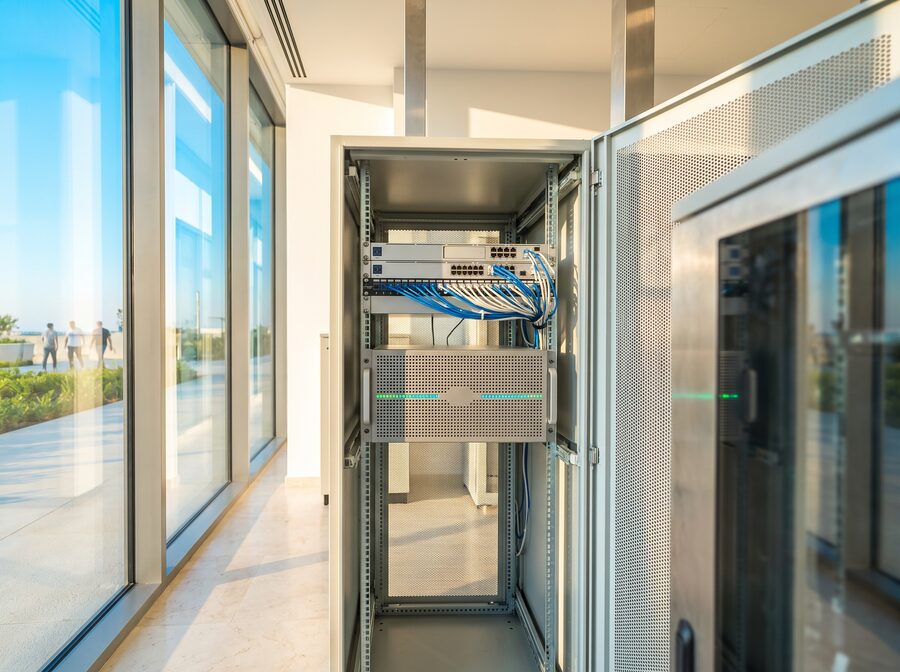
SVA is hardware-agnostic, but the models always run on a box in your building. Choose a Jetson at the lane or a retail GPU server in the back office. Either one holds the full record locally, and SolaaS makes that record reachable from anywhere.
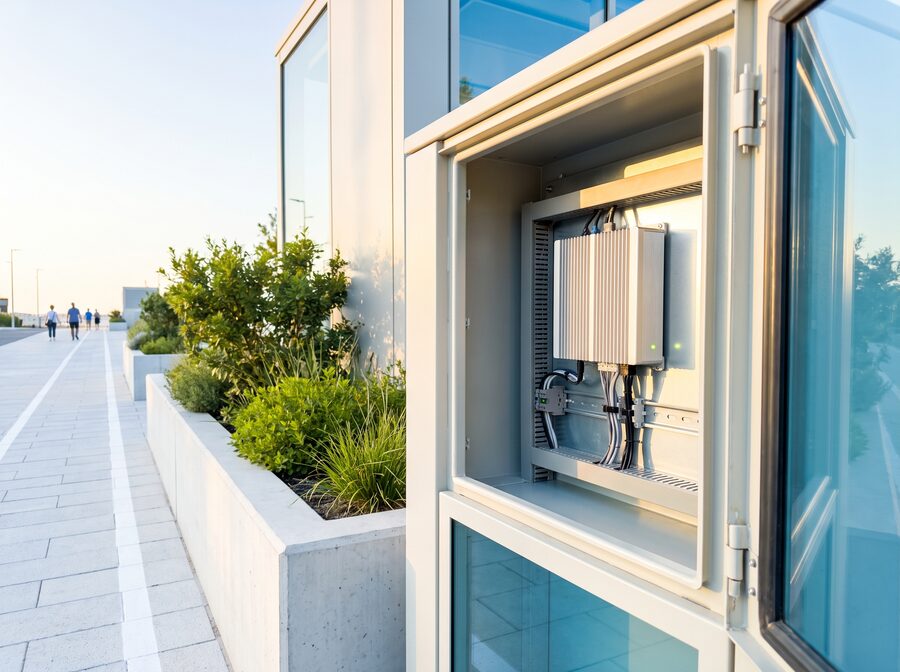
A compact fanless edge computing unit mounted in a weatherproof roadside cabinet
Option A

Jetson Edge

NVIDIA Jetson Orin or AGX at the lane. The full SVA pipeline runs locally, so there is no cloud dependency and no latency over WAN. Ideal for secure facilities, municipal contracts and high-volume gated lanes.
Latency<2ms, local
ConnectivityAir-gapped capable
Best forSecurity-sensitive, high uptime
Adds to option A or B

SolaaS keeps the record reachable.

Every vehicle and every ticket is written to the edge device as it happens. SolaaS replicates that record to SBS-managed AWS infrastructure, so an authorized operator can pull up any site in the portfolio from anywhere.

Inference itself never leaves the building. We do not sell cloud inference at any tier, direct or through partners, because the constraint is bandwidth. Cameras stream to the processor around the clock, not only when a vehicle is present, and the volume scales with the camera mix at each site. A site LAN absorbs that. The ISP uplink behind it usually cannot. So SVA runs the models where the video already is, and replicates the record listed below, not the streams.

Stays on the edge device

  • Full DVR, retained on the Jetson or the GPU server
  • Every vehicle and ticket, logged locally as it happens
  • The whole inference pipeline, stages 01 through 06
  • A backfill queue holding multiple days of records if the uplink drops

Replicated to the cloud

  • Vehicle metadata: plate, state, make, color, class, dimension
  • An entry image and an exit image, the exit dated on departure
  • Short clips, 7–10 seconds, of the drive in and the drive out
  • Ticket and transaction records across the portfolio
HostingAWS, SBS-managed
Data residencyUnited States
Uplink lossMulti-day local queue, auto backfill

SVA plugs into what's already there.

Whether you run Garagenet, a third-party PARCS or a custom operations stack, SVA connects via standard API or deep integration.

Native integration. SVA is the AI layer that powers Garagenet's gate control, frictionless ticketing, valet matching and reporting. Tightest possible integration; feature releases ship in lockstep.

Native · deepest integration

Drop-in LPR and frictionless layer for Designa PARCS. SVA replaces or augments the existing LPR module, putting AI accuracy on top of Designa's established gate and payment hardware.

PARCS integration

SVA integrates with Amano McGann systems via standard messaging protocols. Existing loops, kiosks and pay stations remain in place, and SVA adds the vision layer.

PARCS integration

Full REST API for custom integrations. Webhook events fire on every detection, covering gate commands, ticket creation and anomaly alerts. Billing, reservation and accounting platforms supported. Full documentation available under NDA.

Open integration

See SVA run
on your footage.

Point us at a camera feed from your site and we will run SVA against it. You get the raw detections, the confidence scores and the latency numbers.